
Annual Report
2022 - We celebrate 10 Years of successful protection of Tigers in Thailand
Bild
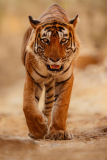
Beim Tigergipfel 2010 in St. Petersburg haben sich die 13 Tigerverbreitungsnationen verpflichtet, bis zum Jahr 2022 die Zahl der freilebenden Tiger von rund 3.200 auf mehr als 6.000 Tiere zu steigern. Aktuellen Zählungen zufolge wurde dieses Ziel nicht erreicht und Tiger sind auf der Roten Liste gefährdeter Arten der IUCN (Internationale Union für Naturschutz) nach wie vor als “Gefährdet” eingestuft.
(© Fotolia/Prasanna)
2021 - Release of the First Sambar in Mae Wong National Park
Bild
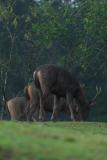
A sustainable improvement of the tiger habitat in Mae Wong National Park requires constant increases in numbers of tiger prey, such as sambar-deers. Central to our activities this year was the release of the first sambar (large deer) from protected areas in their natural habitat, national park forests. In previous years commercial poaching of sambar and bantengs (wild beef) for “bush meat” sale to local restaurants caused a significant decrease in numbers of tiger prey.
(© Zoonar/Petra Wegner)
2020 - Khlong Wang Chao: the Protected Tiger Habitat Continuously Grows
Bild

With the addition of the Khlong Wang Chao National Park the total area of protected tiger habitat increased to 4,500 km2. The year 2020 was a year filled with challenges. Metropoles became ghost towns, populations learned social distancing, and the world was in a state of emergency.
(© Zoonar/Petra Wegner)
2019 - Umphang: a Corridor into the Future
Bild
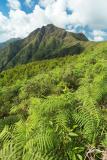
Umphang connects the Mae Wong and Khlong Lan National Parks with Myanmar and provides the tigers new hunting grounds and habitat.
At the Global Tiger Summit 2010 in the Russian St. Petersburg, all 13 tiger range countries set the ambitious animal protection goal of doubling the number of tigers by the year 2022.
(Foto: © kataleewan intarachote)
2018 - Prey Animals for the Tiger
Bild

Release-into-the-wild projects of tiger prey are an important measure to enable a further increase of the tiger population.
The year 2018 began for us with a visit* to our project region, the Khlong Lan and Mae Wong National Parks in Thailand’s Dawna Tenasserim territory.
(Foto: © DNP & WWF Thailand)
2017 - New tiger Cubs in Thailand's National Parks
Bild
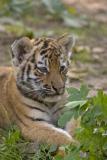
Six newborn tiger cubs have been recorded in Thailand's Mae Wong and Khlong Lan National Parks which further confirms the success of the tiger recovery project in this area.
Our project region – the Dawna Tenasserim Landscape (DTL) - is an extensive, fascinating forest landscape, embedded in a mountainous region along the border between Thailand and Myanmar.
(Foto: © Zoonar/Naturfoto-Online St. Ernst)
2016 - Tigers Return!
Bild
The number of tigers living in the wild globally has risen from 2010‘s 3,200 to 3,890 today.
2016 was a year that again showed that all the measures we initiated to protect tigers in our project region lead to success! The updated tiger census published in April this year shows that the number of tigers living in the wild globally has risen from 2010‘s 3,200 to 3,890 today. Also in our project region, the Dawna-Tenasserim landscape, we were able in 2016 to determine the largest tiger poplulation since the beginning of monitoring.
(Foto: © DNP & WWF Thailand)
2015 - A Successful Year in Tiger Protection
Bild

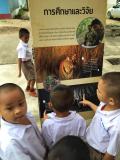
The tireless efforts of numerous game wardens and intensive awareness training conducted in schools and villages pay off: 2015 was a very successful year for tiger protection in Thailand and Myanmar. Was hat sich 2015 in unserer Projektregion, dem Grenzgebiet zwischen Thailand und Myanmar, getan?
Im gesamten Jahr 2015 wurde kein einziger Tiger durch Wilderer erlegt! Ganz im Gegenteil - die Auswertungen der inzwischen 85 Kamerafallen in den Nationalparks Mae Wong und Khlong Lan zeigen, dass sich der Indochinesische Tiger in unserer Projektregion langsam zu erholen scheint!
(Foto: © DNP & WWF Thailand)